
The Genius of Frank Gehry: Architect of Iconic Designs
Frank Gehry is a name synonymous with avant garde architecture. Known for his deconstructivist style, Gehry’s works have left an indelible mark on the landscape of contemporary architecture. His ability to blend chaos with harmony, using unconventional materials and forms, has made him one of the most influential architects of the modern era. In this article, we’ll explore the life, works, and lasting legacy of Frank Gehry, diving deep into his most iconic creations and the impact he’s had on the world of architecture.
Who is Frank Gehry?
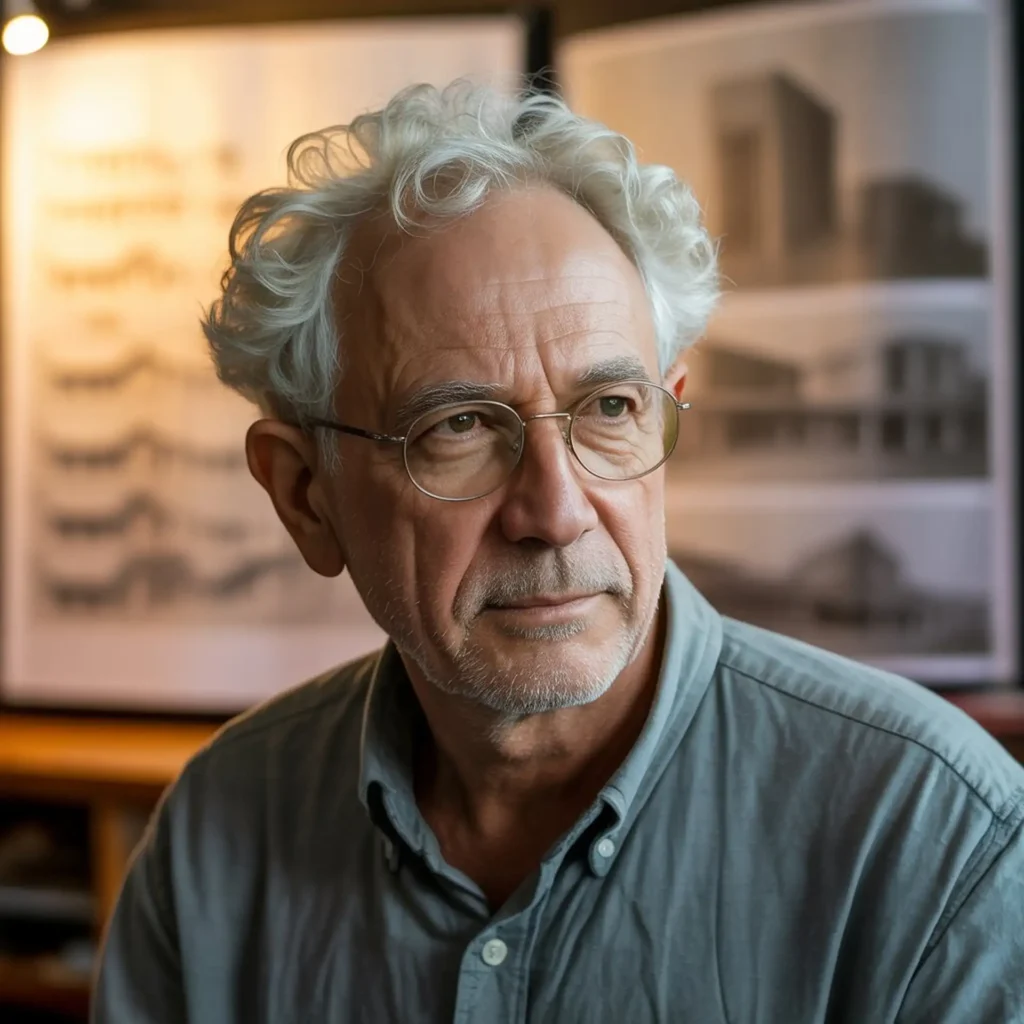
Born in Toronto, Canada, in 1929, Frank Gehry is a Canadian American architect renowned for his innovative and often controversial designs. He is known for rejecting the traditional forms of architecture in favor of more fluid, dynamic, and experimental structures. Gehry’s approach to design challenges the conventional understanding of space and aesthetics, incorporating organic shapes, fragmented forms, and unexpected materials into his buildings.
Over the course of his career, Gehry has received numerous accolades, including the Pritzker Architecture Prize, often referred to as the “Nobel Prize of architecture.” His architectural style, known as deconstructivism, emphasizes non-linear design, broken geometries, and an overall sense of movement within the structure. Gehry’s influence on architecture can be seen in a variety of public buildings, museums, cultural institutions, and private residences.
The Unique Style of Frank Gehry
What sets Frank Gehry apart from other architects is his ability to push the boundaries of design, creating buildings that are both sculptural and functional. His style is a blend of imagination and practicality, with a focus on disrupting conventional forms.
Here are some key features of Gehry’s architectural style:
Deconstructivism: Breaking Traditional Boundaries
Gehry is a pioneer of deconstructivism, a movement that seeks to fragment and dislocate traditional architectural forms. This style rejects the idea of harmony and instead focuses on asymmetry and fragmentation. Gehry’s buildings often appear to be in motion, with jagged edges and seemingly random, overlapping forms. This chaotic approach to design gives his works a sense of energy and dynamic fluidity.
Use of Non-Traditional Materials
Gehry is also known for his innovative use of materials. He often incorporates unconventional materials like titanium, stainless steel, and plywood into his designs, creating structures that appear to be part of the landscape rather than objects imposed on it. The use of reflective materials like steel and glass also adds a sense of movement, with light playing off the surfaces in various ways throughout the day.
Sculptural and Organic Shapes
Another hallmark of Gehry’s style is his use of sculptural forms. His buildings often resemble works of art, with flowing curves, dramatic angles, and fragmented surfaces that challenge the traditional notion of what a building should look like. Gehry’s designs are often compared to sculptures rather than conventional buildings, and this organic approach to architecture has made his work instantly recognizable.
Iconic Works of Frank Gehry
Over the decades, Frank Gehry has designed some of the most iconic buildings in the world. Each of his projects carries his signature style while pushing the boundaries of what architecture can be. Let’s take a closer look at some of his most famous works.
The Guggenheim Museum Bilbao (Spain)
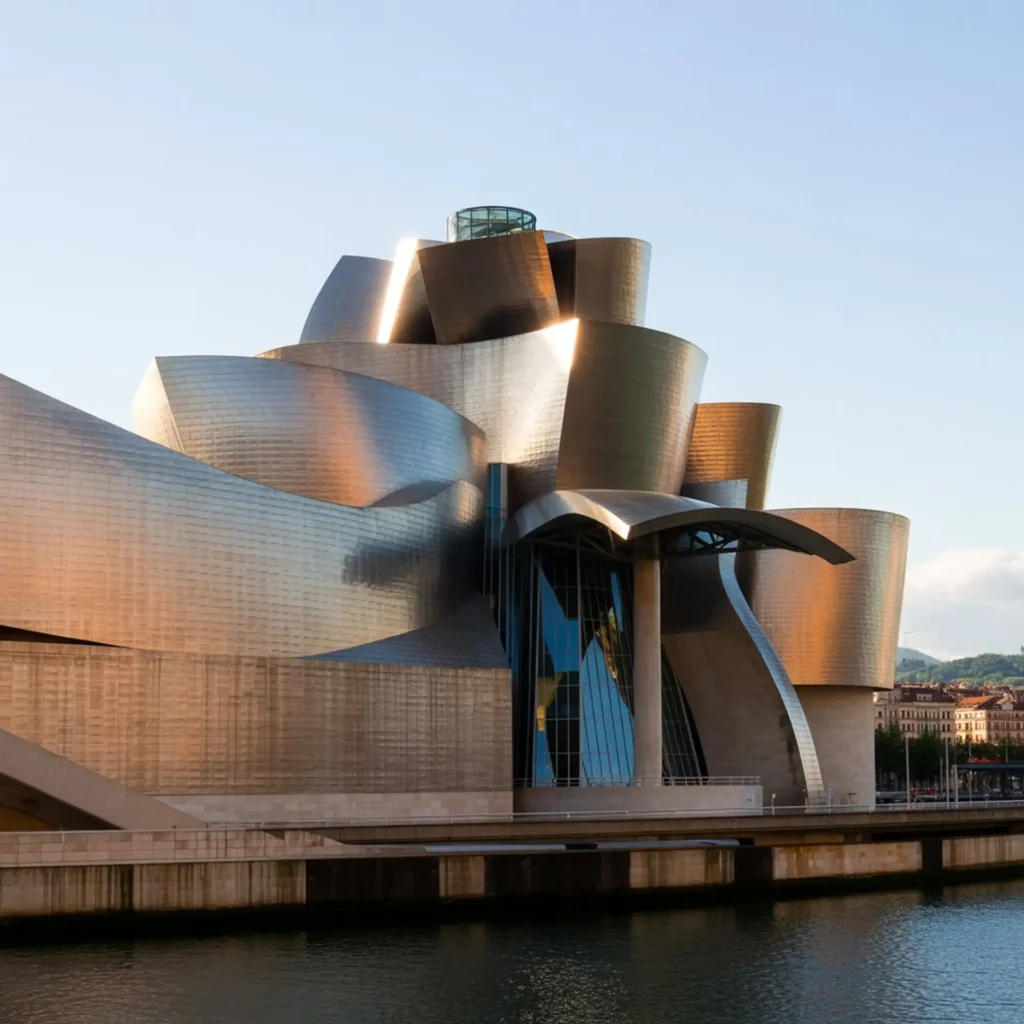
Arguably Gehry’s most famous work, the Guggenheim Museum Bilbao is a testament to the power of deconstructivism. Completed in 1997, the museum’s fluid, curvilinear design was groundbreaking at the time and has since become one of the most photographed buildings in the world. The building’s titanium exterior appears to be in constant motion, with sweeping curves and sharp angles that reflect light in fascinating ways. The Guggenheim Bilbao put Gehry on the global stage and revolutionized museum design.
Walt Disney Concert Hall (Los Angeles, USA)
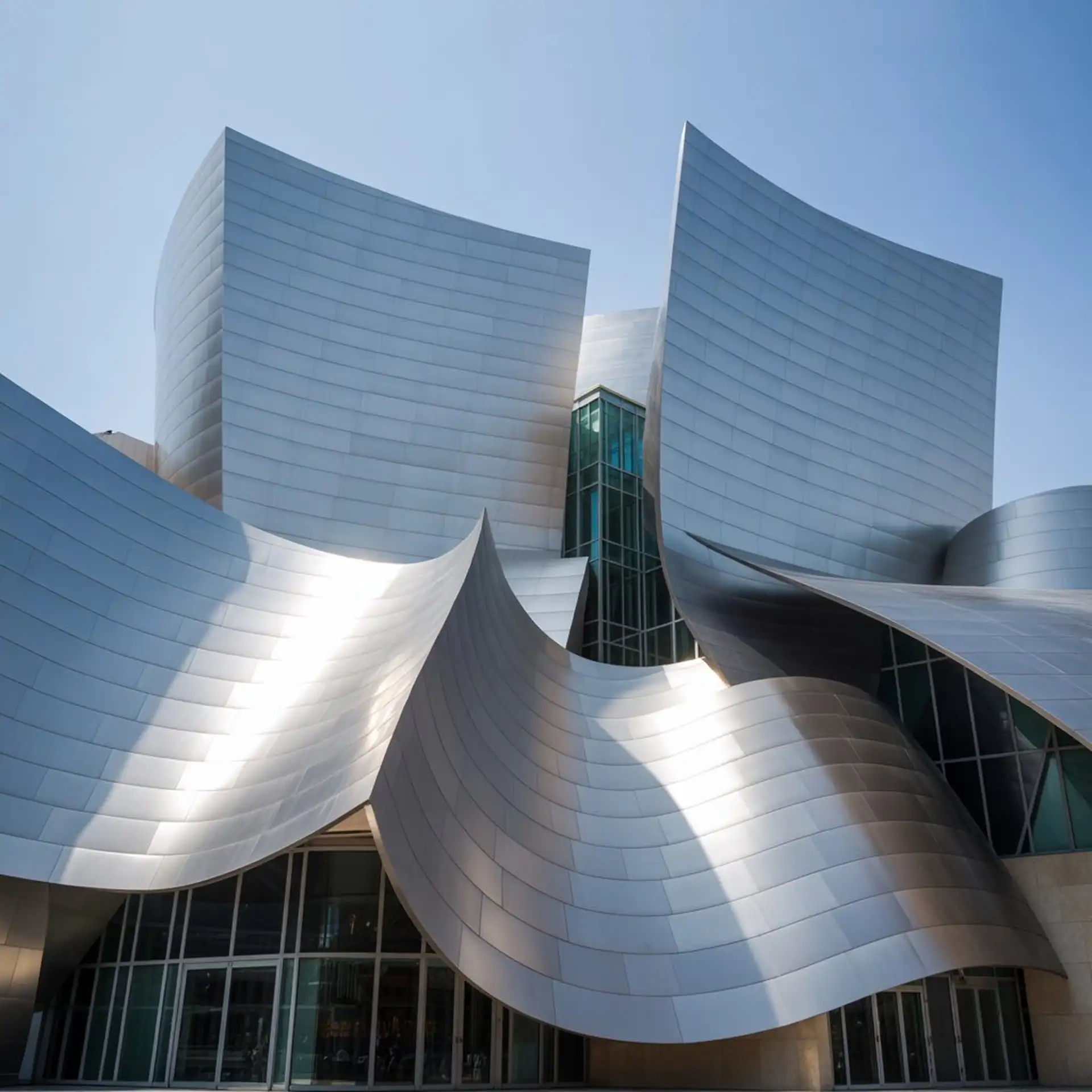
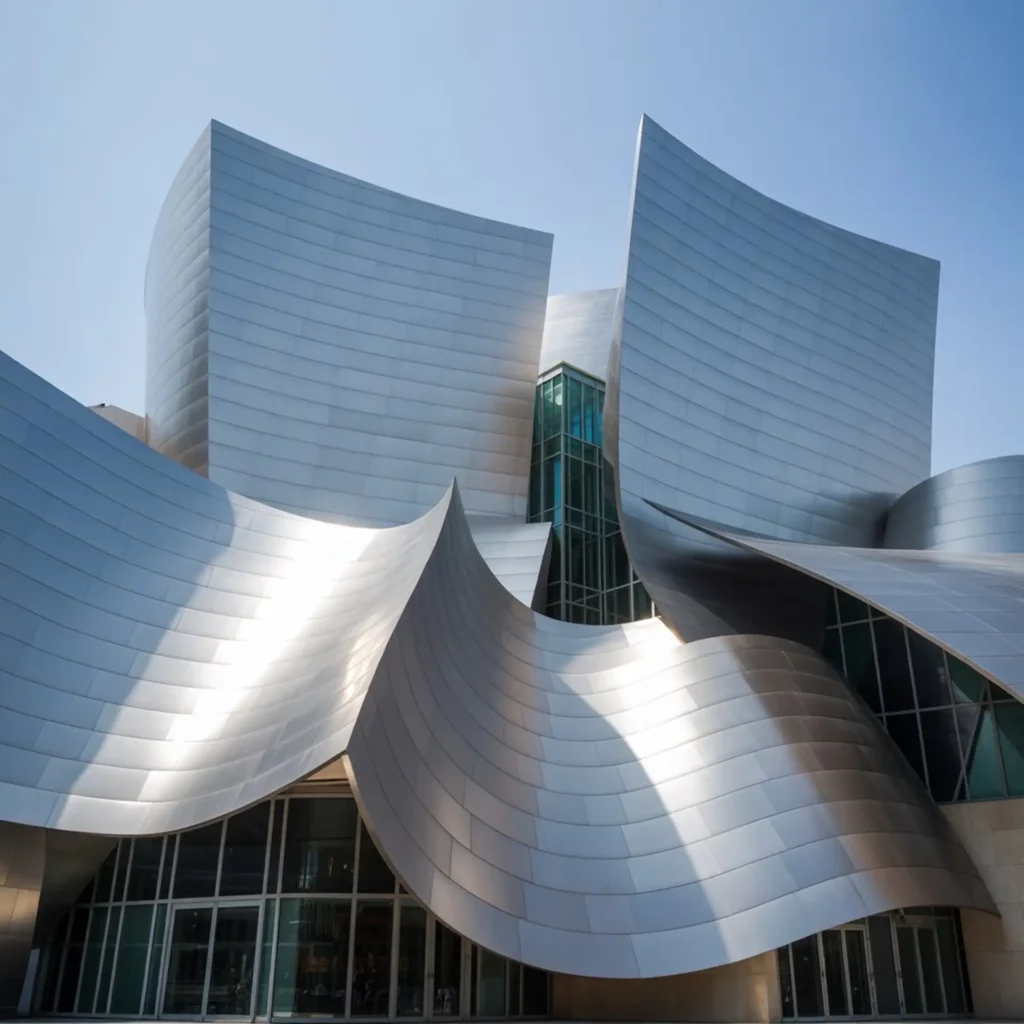
The Walt Disney Concert Hall in Los Angeles is another iconic Gehry design that exemplifies his sculptural style. Completed in 2003, this concert hall features a bold, sweeping design with dramatic curves made from stainless steel. The building’s unique form complements the music that takes place inside, with its design symbolizing the fluidity and movement of sound. The Walt Disney Concert Hall is not only an architectural masterpiece but also an acoustical marvel, thanks to Gehry’s collaboration with sound engineer Yasuhisa Toyota.
The Dancing House (Prague, Czech Republic)
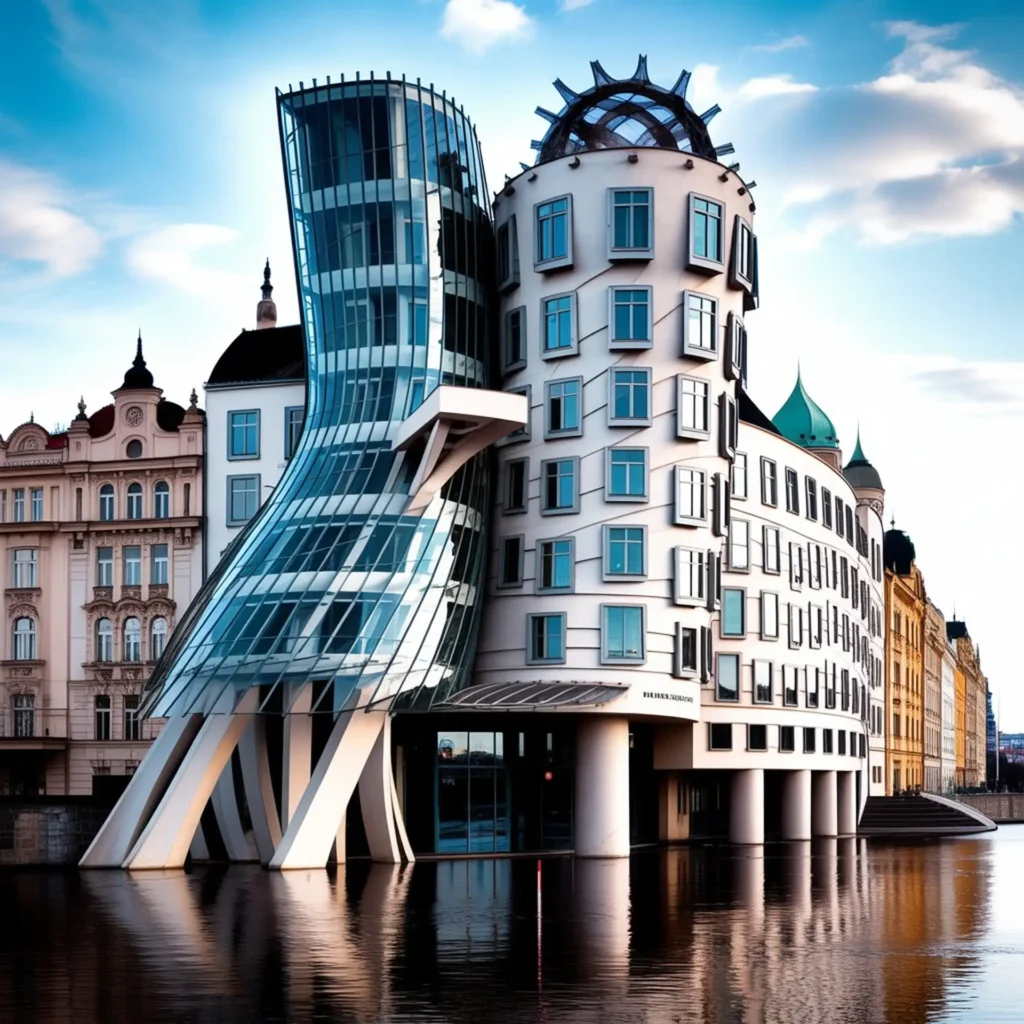
Although Gehry didn’t design the entire Dancing House, his influence is evident in this striking structure. The building, designed in collaboration with architect Vlado Milunić, is known for its unusual and dynamic shape, with one side resembling a pair of dancers in motion. The Dancing House is a blend of modern and deconstructivist styles, using curvaceous glass and concrete forms to create a sense of movement that stands out in the Prague skyline.
The Fondation Louis Vuitton (Paris, France)
The Fondation Louis Vuitton is a museum and cultural center located in the Bois de Boulogne in Paris. Completed in 2014, this building features Gehry’s signature fluid forms, with glass sails that appear to be billowing in the wind. The museum’s use of glass and concrete creates a sense of transparency and lightness, allowing the building to blend into the surrounding park. The Fondation Louis Vuitton is an example of Gehry’s ability to create a building that is both part of the landscape and an iconic structure in its own right.
The Vitra Design Museum (Germany)
The Vitra Design Museum in Germany is another example of Gehry’s ability to merge functionality with artistic expression. The museum’s design features a unique combination of flowing curves and sharp angular shapes. The building’s design is inspired by the concept of “movement,” with walls that appear to be in motion and spaces that interact with the surrounding environment.
The Legacy of Frank Gehry
Frank Gehry’s contributions to architecture have left a lasting legacy. He has influenced a generation of architects and designers, pushing the boundaries of what is possible in architecture. His works continue to be celebrated for their innovation, creativity, and boldness. Gehry has shown that architecture is not just about function, but about creating an experience one that engages the senses, challenges expectations, and adds to the cultural fabric of a city.
Gehry’s Impact on Modern Architecture
Through his work, Gehry has helped define the deconstructivist movement, which has influenced countless architects and designers. His designs have made people rethink the relationship between form and function, as well as the role of architecture in shaping our experience of the world. Gehry’s work has made buildings into works of art, inviting viewers to engage with them in new ways.
A Visionary for Future Generations
As Gehry continues to work well into his 90s, his legacy is far from over. He remains a visionary, exploring new technologies and materials to create even more innovative designs. Gehry’s work challenges the notion that architecture is merely about constructing buildings; he has shown that it is an opportunity to shape the future, spark imagination, and inspire creativity.
Conclusion: Frank Gehry’s Timeless Influence
Frank Gehry is more than just an architect he is a pioneer who has redefined what architecture can be. His iconic works, from the Guggenheim Museum Bilbao to the Walt Disney Concert Hall, have transformed the way we experience and interact with the built environment. Gehry’s unique approach to design embracing chaos, fragmentation, and unconventional materials has left a permanent mark on the world of architecture. As Gehry continues to push boundaries and redefine architectural norms, his influence will undoubtedly continue to shape the future of design.

